Musa basjoo
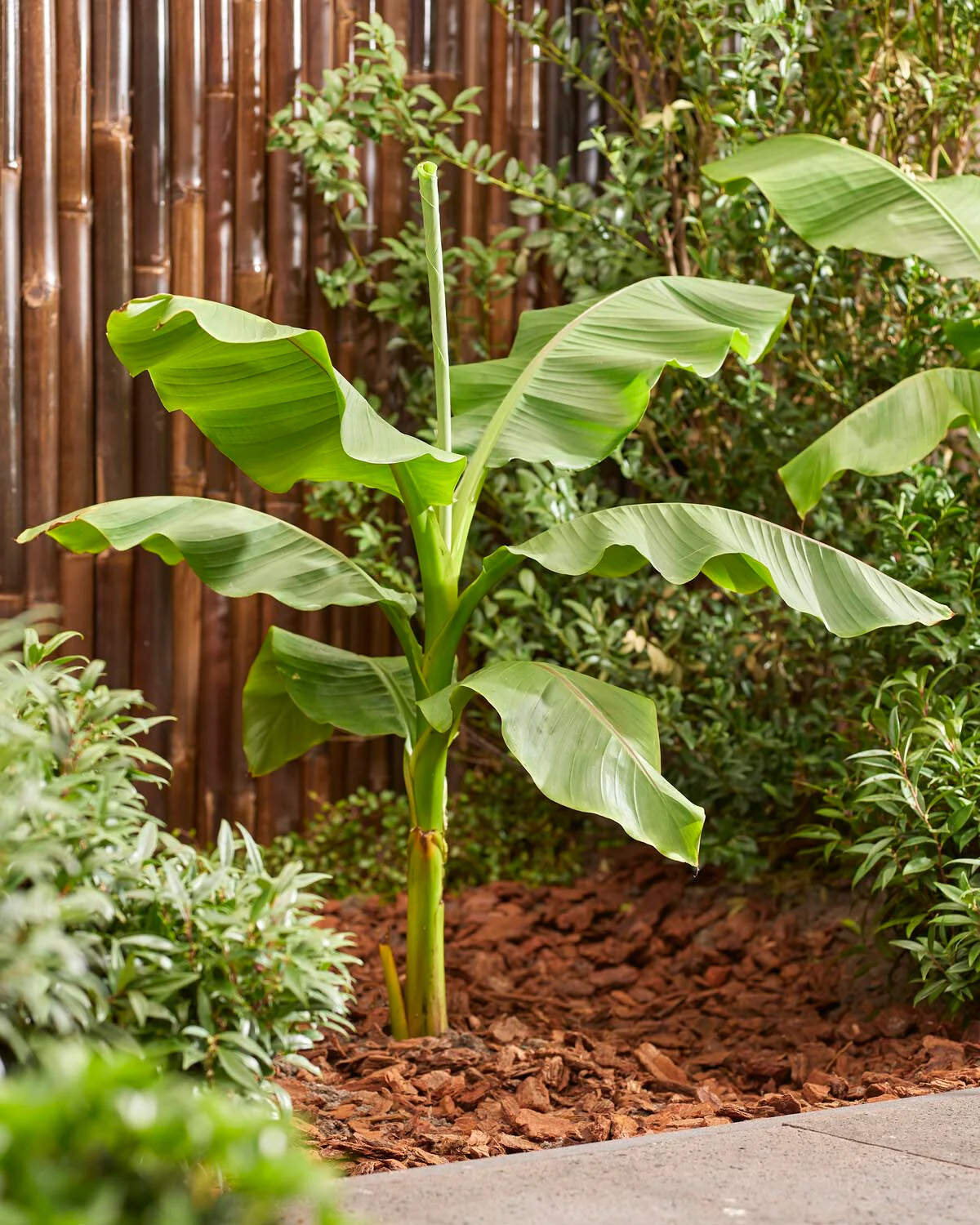
Turn your attention to tropical treasures like Musa basjoo and your summer garden will flourish with the leafy lushness of the jungle! Musa basjoo is also known as the hardy banana plant or hardy banana tree, so if you love the look of a sub-tropical border but don’t have the climate to match, then this resilient banana palm is the one for you. It’s useful to note that Musa basjoo is a perennial plant, so don’t panic if it dies back for winter. A fresh set of huge banana leaves will start to unfurl the following spring, forming a beautiful canopy during summer. Try planting your hardy banana plants with cannas, dahlias or begonias to introduce some vibrant colour into your exotic border!
It’s thought Musa basjoo can tolerate winter temperatures down to -15°C, although it’s a good idea to treat it like a half hardy perennial and apply a thick mulch around the base for winter to ensure it’s well protected in case of prolonged freezing spells. The banana leaves may die back for winter but Musa basjoo will enthusiastically sprout again the following spring. When these banana palms are fully mature, they might grow bananas but they are not edible ones. Musa basjoo (also known as Japanese banana) will appreciate a sheltered spot in the garden, in full sun or partial shade, and with a humus-rich soil.
Original: $12.99
-70%$12.99
$3.90Product Information
Product Information
Shipping & Returns
Shipping & Returns
Description
Turn your attention to tropical treasures like Musa basjoo and your summer garden will flourish with the leafy lushness of the jungle! Musa basjoo is also known as the hardy banana plant or hardy banana tree, so if you love the look of a sub-tropical border but don’t have the climate to match, then this resilient banana palm is the one for you. It’s useful to note that Musa basjoo is a perennial plant, so don’t panic if it dies back for winter. A fresh set of huge banana leaves will start to unfurl the following spring, forming a beautiful canopy during summer. Try planting your hardy banana plants with cannas, dahlias or begonias to introduce some vibrant colour into your exotic border!
It’s thought Musa basjoo can tolerate winter temperatures down to -15°C, although it’s a good idea to treat it like a half hardy perennial and apply a thick mulch around the base for winter to ensure it’s well protected in case of prolonged freezing spells. The banana leaves may die back for winter but Musa basjoo will enthusiastically sprout again the following spring. When these banana palms are fully mature, they might grow bananas but they are not edible ones. Musa basjoo (also known as Japanese banana) will appreciate a sheltered spot in the garden, in full sun or partial shade, and with a humus-rich soil.